A memory from 2020 came back to me this weekend after the latest tariff news involving Canada.
Not because tariffs and a global pandemic are the same thing. They obviously aren’t.
But they do have one important thing in common.
They scare the hell out of people.
And scared people have a remarkable ability to make very expensive decisions.
Back in early 2020, COVID was gripping the world. Most of us were checking COVID trackers several times a day, watching infection numbers climb and wondering whether toilet paper had somehow become the new gold standard.
Around that time, I was on a Zoom call with real estate industry leaders from across Canada and as far away as New Zealand. One of our mentors had brought us together to hear what was happening in each of our local markets.
During the call, one Realtor mentioned that he had watched the stock market collapsing and decided to sell his entire investment portfolio.
Millions of dollars.
Gone to cash.
He sold during the third week of March.
His reasoning was simple. The market had dropped roughly 37% in a matter of weeks. He wanted to stop the losses, protect what he had left and then buy everything back once the market dropped even further.
A perfectly logical plan.
Except for one tiny inconvenience.
The market stopped falling.
Here was the timeline:
- February 12, 2020: Dow Jones Industrial Average approximately 29,500
- March 23, 2020: Dow Jones Industrial Average approximately 18,600
I don’t know the exact date he sold, but if it was March 23, he accomplished something extraordinarily difficult.
He basically sold at the bottom.
The very next day, the Dow jumped more than 11%.
By November 2020, it had crossed 30,000 for the first time in history.
That is one hell of a tuition bill for a lesson in market timing.
What stayed with me wasn’t really what happened to the stock market.
It was why he sold.
Fear.
Uncertainty.
Scarcity.
And that overwhelming human urge to do something when doing nothing feels reckless.
That same psychology is showing up again today.
Tariffs. Higher living costs. Mortgage rates. Concerns about employment. Economic uncertainty. Political noise.
Turn on the television long enough and apparently civilization will be wrapping up sometime around Thursday afternoon.
And when people become uncertain, they freeze.
Buyers stop buying.
Sellers hesitate to sell.
People postpone decisions.
Everyone waits for someone to announce that the coast is officially clear.
Unfortunately, markets don’t send out invitations when the coast is clear.
By the time everyone feels comfortable again, the opportunity has usually changed.
I’ve been advising people about real estate for four decades, and my approach hasn’t changed dramatically.
Good advice based on long experience rarely needs a software update.
When someone tells me they’re considering buying a home, one of my first questions is:
How long do you plan on owning it?
One year?
Five years?
Twenty-five years?
Because the answer changes everything.
Take a young couple purchasing their first home with the intention of staying there for five years before moving up.
Should their decision really depend on what happens with tariffs over the next six months?
Five years from now, whatever is dominating today’s headlines will probably be something we barely remember.
Think back to August 2021.
The real estate market was booming.
Mortgage rates were ridiculously low.
We were still talking about vaccines.
QR codes had suddenly become part of everyday life.
And for reasons I still don’t completely understand, yeast had briefly become a valuable commodity.
That was five years ago.
Today, it feels like another lifetime.
Five years from now, much of what feels enormous today will look the same way.
Real estate has also spent the past few years becoming the red-headed stepchild of the investment world.
For years, people believed housing prices could only go up.
Then the market changed and suddenly people started believing they could never go up again.
Both ideas are ridiculous.
Markets move.
Sometimes dramatically.
What matters is time.
Consider a $600,000 home.
If that property increased in value by an average of 5% annually over ten years, it would be worth approximately $977,000.
At the same time, the owner has been paying down the mortgage, living in the asset and, in the case of a qualifying principal residence, benefiting from tax-free capital appreciation.
That’s why home ownership has created wealth for generations.
Not because real estate goes up every year.
It doesn’t.
Not because owning property is risk-free.
It isn’t.
It works because time does an enormous amount of heavy lifting.
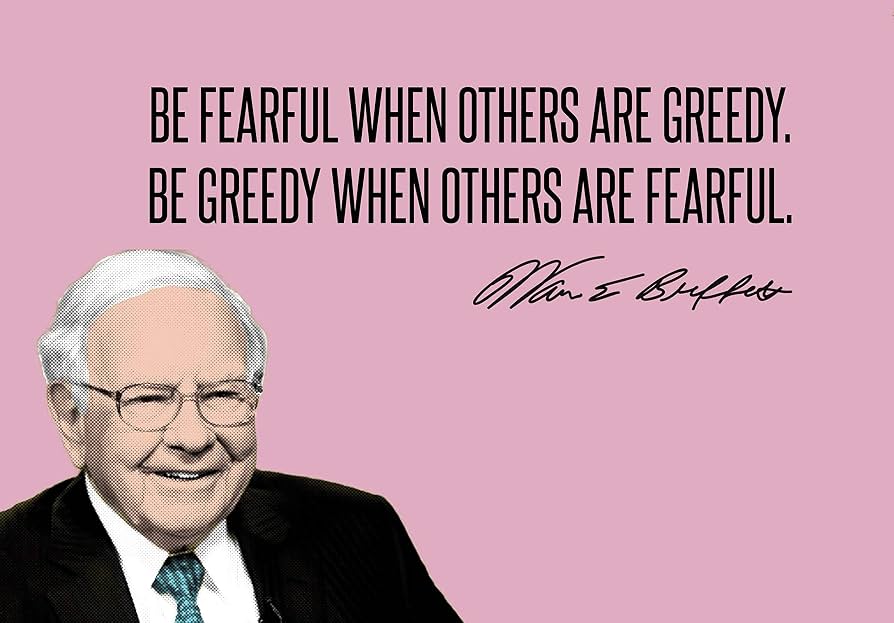
Warren Buffett famously said:
“Be fearful when others are greedy, and greedy when others are fearful.”
You don’t have to take my word for it.
Take Warren’s.
Fear keeps people out of markets.
Fear also convinces people that today’s circumstances will last forever.
They rarely do.
The people who often benefit most are the ones capable of looking beyond the current noise and making decisions based on where they expect to be five or ten years from now.
The Realtor who sold millions of dollars of stock in March 2020 wasn’t stupid.
He was afraid.
There is a very expensive difference.
And if history teaches us anything, it’s this:
The headlines change. Human nature apparently refuses to get the memo.
If you have questions about buying or selling a home in today’s market, I can be reached at lindsay@buyselllove.ca or 905-743-5555.